
Immigrant Story

I’m so grateful to the Korean American Story’s Legacy Project for recording these beautiful videos of my parents. My dad and mom, ages 90 and 88, respectively, shared stories of life in Korea and their early days in the U.S. Their videos will be archived at a USC library.
To be honest, I can barely watch these without crying. I’m grateful that my parents are still so healthy and vibrant, and yet I’m keenly aware that the days we have together are numbered.
We moved to the U.S. in the early 70’s, when the passage of the Immigration and Nationality Act of 1965 (also known as the Hart-Cellar Act) ended a policy that discriminated against people from Asia, as well as southern and eastern Europe. South Korea was still a developing nation then, ruled by a repressive dictator, with the devastation of the civil war less than two decades in its past.
We often valorize the immigrant elders in our families, and it’s right to do so. With courage, grit, and hard work, they persevered through great adversity and built a life in a country where they were strangers. They came to America, fleeing violence or seeking economic opportunity, or both.
These days, I watch in horror as immigrants in our country are rounded up, incarcerated, and deported (often without due process). I listen to how people are labeled: undocumented, criminal, perpetrator. These words are meant to make us forget our common humanity—that the young man arrested after his shift at a restaurant or in a Home Depot parking lot is also a son, a brother, and perhaps someday…a 90-year-old grandfather. If the team that filmed my parents had the resources to capture the story of each immigrant being terrorized today, what stories might we hear?
What I’m reading
I loved Alexander Chee’s essay collection, How to Write an Autobiographical Novel, which is a lot about writing, studying writing (with Annie Dillard!), and teaching writing. Right up my alley.
I’m slowly making my way through Daniel Mendelsohn’s translation of The Odyssey. I even enjoyed his notes and observations on why Homeric Greek is so difficult to translate and why his approach is better than those who have gone before him (he doesn’t say this explicitly, but it’s definitely the vibe).
Younger Next Year for Women is written in a folksy har-har voice, which is slightly maddening, but the advice is good: exercise, don’t eat junk, be connected to community, and give your life to things that matter.
Life, lately
A friend who recently moved back from Seoul came over for dinner and brought over Korean strawberries from Jalgachi, the Korean mall in Daly City.
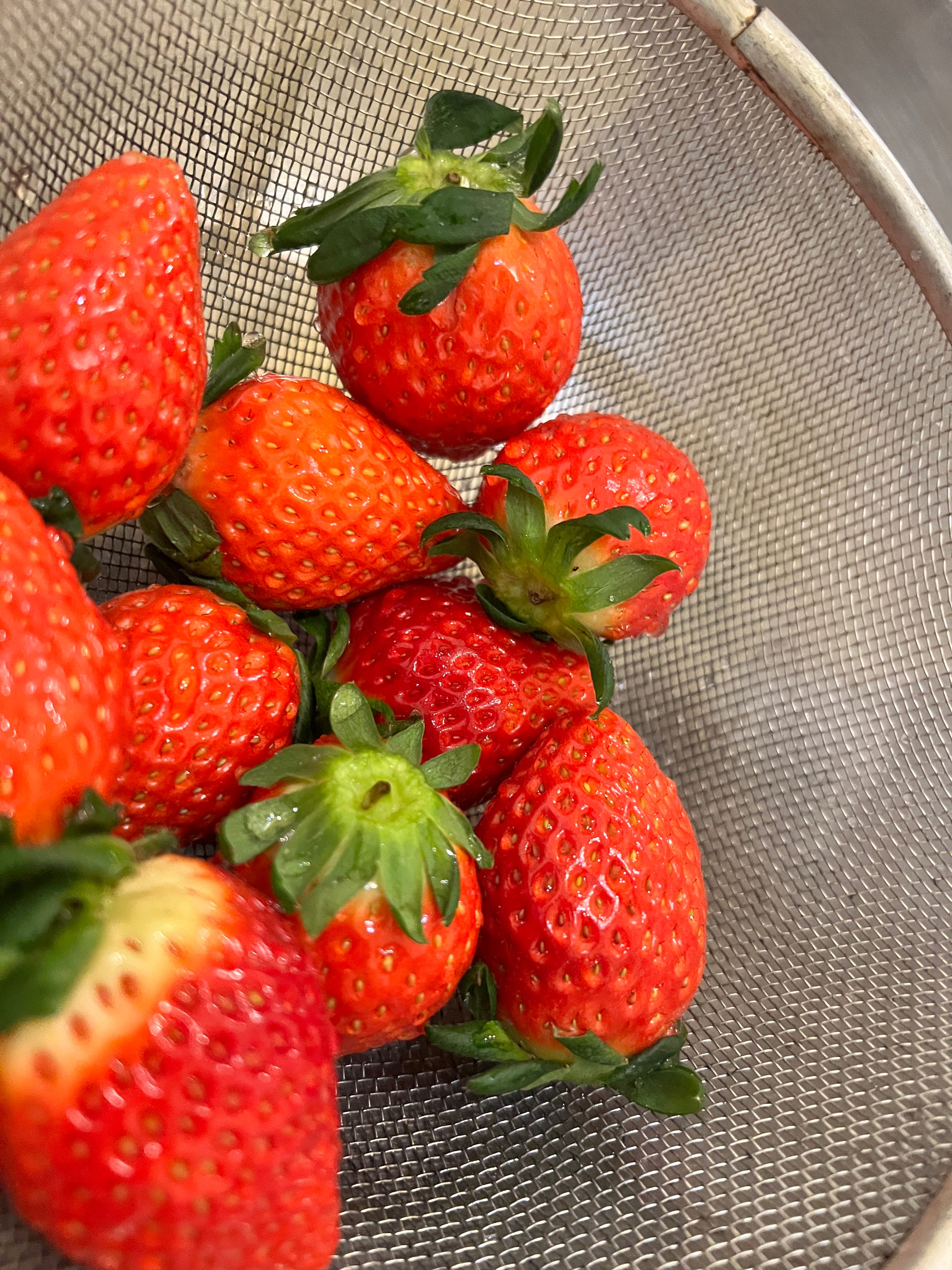
In Korea, I learned, strawberry season is in January as the fruit is grown hydroponically in greenhouses and requires short days. They were delicious and tasted very different from American strawberries…softer flesh, with a fragrance almost like candy.
Pre-order now
SONG FOR ANOTHER HOME is available for pre-order via your local bookstore or via Bookshop.org, Amazon, Barnes & Nobles or wherever you buy books.
I love those clips of your parents so much. ❤️ Also, thank you for the succinct summary of Younger Next Year for Women. So helpful! 😂